Thanks to our highly trained team—which has come together and grown over the course of our practice’s existence—we are able to provide you with virtually any physiotherapy service currently available. Regular, targeted internal and external continuing education ensures that you receive treatment based on the latest findings and best practices.
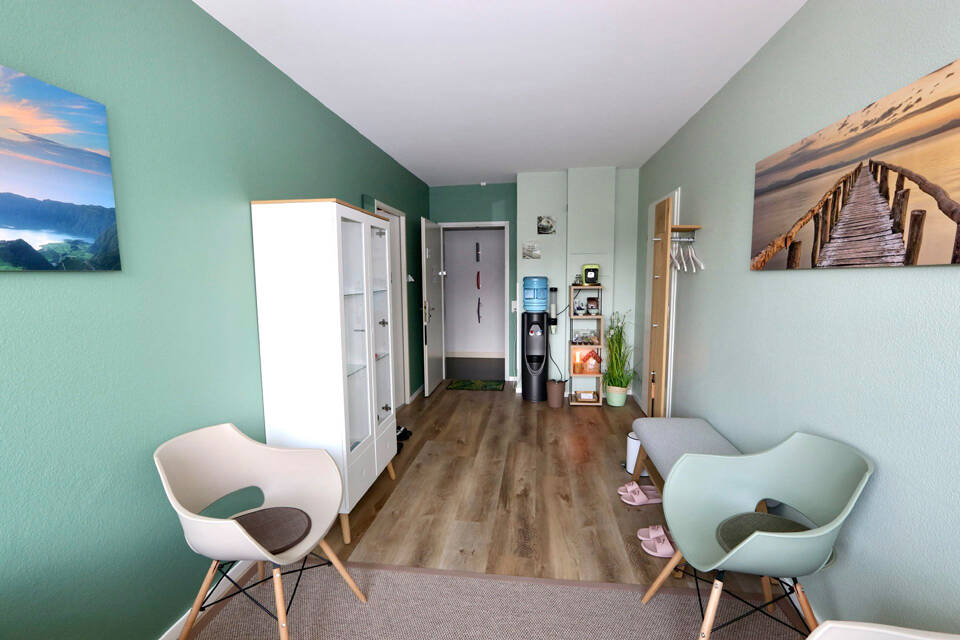
Since our practice was founded, we have placed the utmost importance on a positive work environment—both for patients and among our therapists. This not only makes your visit with us more pleasant but also fosters an optimal exchange of professional knowledge and keeps the entire team highly motivated.
Therapies:
Conventional Physical Therapy:
Manual Therapy (SAMT),
The goal of manual therapy is to identify disorders of the musculoskeletal system and provide appropriate treatment. These techniques are performed by hand (manually). They are gentle and painless.
Manual techniques, in the broadest sense, are among the oldest medical interventions and have existed for millennia in all cultures and in a wide variety of forms.
Functional Taping:
Functional taping uses elastic bandages that, depending on how they are applied, can support limited functions (e.g., in cases of persistent weakness in the forefoot flexor muscles, to enable a functional and pain-free rolling motion of the foot while walking) or train movements as part of functional exercise (e.g., suboptimal hip stability during the stance phase following prosthetic fitting).
Functional Kinesiology:
According to Klein-Vogelbach, there is an ideal body structure, which she calls the “Hypothetical Norm.” It is characterized by optimal weight distribution and favorable lengths, widths, and depths of the trunk and extremities. The ideal body structure enables economical movement patterns.
The therapeutic approach of functional kinesiology (FBL) follows the principle of economy: maximum performance with minimal effort and minimal wear and tear.
The foundation is the assessment of the “functional status” (findings), which identifies deviations from the norm and describes the “functional problem.” Treatment involves therapeutic exercises and treatment techniques. In addition to providing the patient with very detailed instructions, these also include adapting model exercises to address the patient’s specific functional problem.
Suspension Table
The suspension table is a therapeutic aid that enables the therapist to perform treatments while partially relieving the patient’s body weight or the weight of specific affected body segments. Depending on the diagnosis and therapeutic goals, these body segments are suspended from the table using slings attached to ropes.
Sports Physical Therapy
Lymphatic Drainage: a pleasant , soothing manual treatment to relieve lymphatic congestion caused by overuse or disease of the lymphatic system (edema). It is only effective when used in conjunction with compression therapy.
Sohi Technique: a subtle form of manual therapy. Through a thorough understanding of the joint’s condition, significant results can be achieved with low intensity. A holistic (whole-body) form of therapy.
Spiral Dynamics: An active approach to addressing physical issues by considering the body as a whole. The spiral form provides a stimulating foundation for movement.
Dorn-Breuss Therapy: a meaningful combination of passive and active therapy. The Breuss massage is performed with the patient lying on their stomach; it is calming and rhythmic. Dorn therapy is an active mobilization technique in which the patient actively participates in the therapist’s manual mobilization with momentum. Liberating!
Breathing Therapy: using the Flutter, Spirotiger, and manual breathing therapy
MTT: Medical Training Therapy
FDM: Fascial Therapy (Fascial Distortion Model)
Neuro-Centered Training / Neuroathletics
PRIVATE TREATMENTS:
Passive Treatments:
Fango
Electrotherapy
Kinesiology
In-home treatments
Medical exercise therapy
Please visit us in Gundeldinger Feld (Gundeli)!