Refueling with E10 Abroad
Refueling with E10: Compatibility, Consumption & Tips for Abroad
Anyone driving to a neighboring country is often faced with a choice at the petrol pump: E5 or E10? While Unleaded 95 (E5) is the standard in Switzerland, E10 has become established in many EU countries. As of 2026, most modern petrol engines can handle the biofuel without any problems – but there are exceptions you should know about.
Key Facts: Refueling with E10
An overview of the most important facts about filling up with E10:
Over 95 percent of all petrol-powered cars on our roads can run on E10 without any problems.
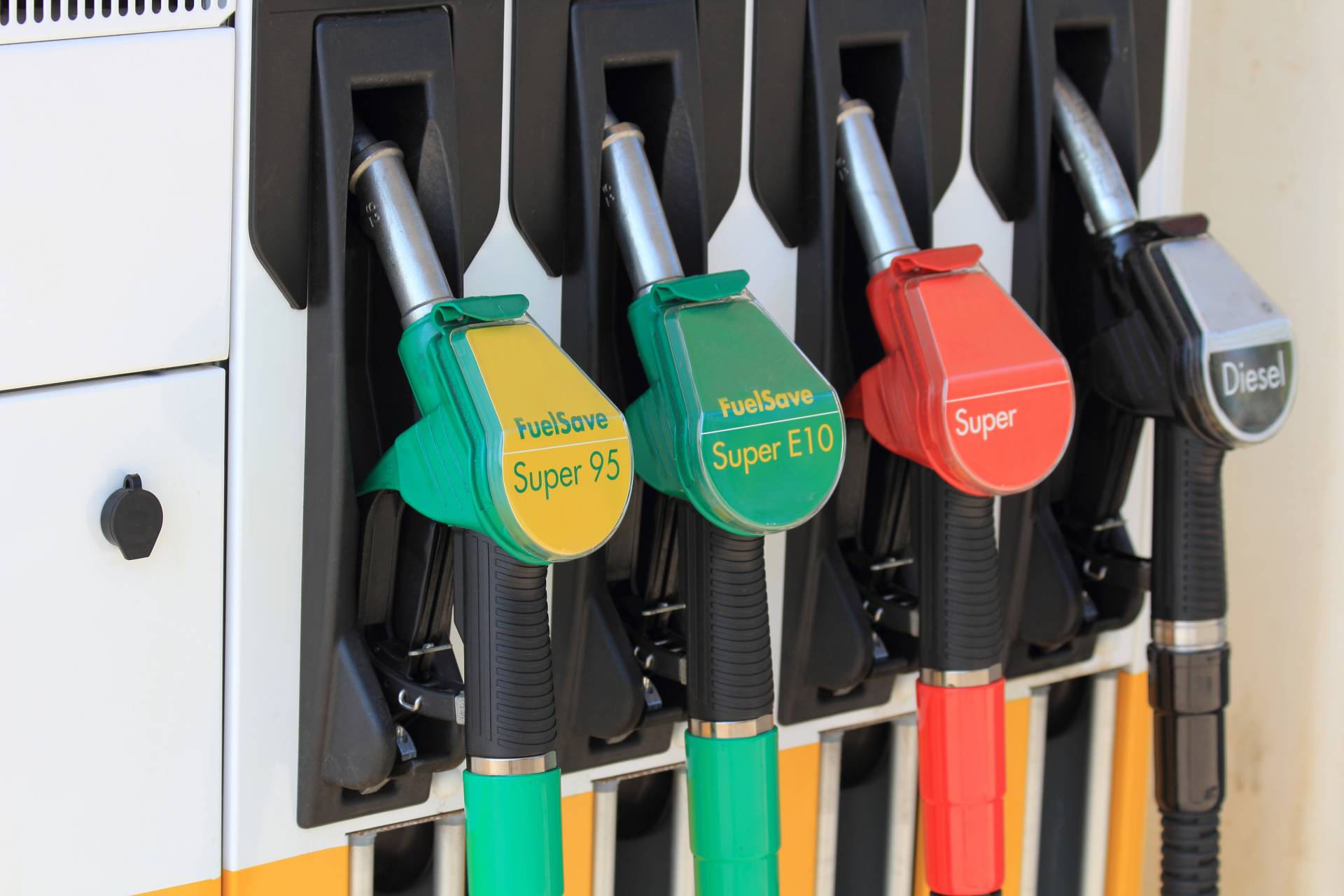
The 'E' stands for ethanol, the '10' for the maximum proportion of 10 percent from renewable resources.
Fuel consumption increases by only about 1.5 percent with E10 due to its lower energy content.
In countries like Germany, E10 is often around 6 cents cheaper at the pump than conventional Super E5.
In Switzerland, regular Unleaded 95 (E5) is the standard; E10 is not widely available here.
Those who inform themselves before driving abroad can save money at the pump without risking engine damage.
Important Terms Regarding Petrol
- E10
Petrol (gasoline) blended with up to 10 percent bioethanol. Serves to reduce fossil fuel usage.
- E5 (Unleaded 95)
Conventional petrol with a maximum of 5 percent bioethanol. Known in Switzerland as Unleaded 95 and is the standard fuel.
- Bioethanol
An alcohol derived from biomass (such as grain or sugar beet) that serves as a renewable fuel additive.
Option A: Super E10
- Best when: Your own vehicle is approved by the manufacturer and you want to save money at the pump.
- Typical costs: Often approx. 6 cents cheaper per litre than E5.
- Risks / Disadvantages: Slight increase in consumption (approx. 1.5%); severe engine damage can occur in non-approved vehicles.
- Suitable for: Drivers of modern petrol cars (almost all vehicles built from 2012 onwards are approved).
Option B: Super E5 (Unleaded 95)
- Best when: The car does not have E10 approval (e.g. older models, modern classics) or there is uncertainty regarding compatibility.
- Typical costs: Slightly more expensive to buy, but minimally lower consumption.
- Risks / Disadvantages: Higher fuel costs, especially for frequent drivers.
- Suitable for: Owners of classic cars, first-generation direct injection engines, and non-approved vehicles.
How to Check Your Car's E10 Compatibility
Before reaching for the cheaper E10 pump abroad, you should make sure that your vehicle is compatible with the fuel. Proceed as follows:
Check vehicle documents and fuel cap: Look in the owner's manual or on the inside of the fuel filler flap for corresponding information (often marked with an E10 symbol).
Consult official approval lists: Use the daily updated lists from automobile associations (e.g. TCS, ADAC) or the DAT (Deutsche Automobil Treuhand) to check your exact model and year of manufacture.
When in doubt, ask the manufacturer: Contact your brand dealership or car garage if your model is not clearly listed.
If not approved, strictly use E5: Do not take any risks. Even a single tank of E10 can destroy seals and aluminium components in unsuitable vehicles.
Filled up incorrectly? Leave the engine off: If you have accidentally filled a non-approved car with E10, do not start the engine under any circumstances. Call the breakdown service.
Travel tip: Find out about the fuel designations in your destination country before you leave, as these can vary regionally.
Frequently Asked Questions About E10
Here you will find the most important answers regarding the biofuel E10 and its use at home and abroad.
If your car is not explicitly approved for E10, you must not start the engine under any circumstances. The aggressive ethanol can attack seals, hoses, and aluminium components. Contact a breakdown service or a car garage immediately to have the tank professionally pumped out.
Switzerland did not join the Europe-wide introduction in 2011. The reasons included the high conversion costs for petrol stations and the controversial environmental balance of bioethanol. The standard at Swiss petrol pumps remains Unleaded 95, which contains a maximum of 5 percent ethanol (E5).
Yes, but the difference is minimal. Because bioethanol has a slightly lower energy content than pure petrol, fuel consumption increases. However, current tests show that the additional consumption is very slight in practice and is hardly significant.
In most cases, yes. In neighboring countries (for example in Germany), E10 is often noticeably cheaper at the pump than conventional Super E5. This price advantage usually more than compensates for the minimal increase in consumption.
If you have any further questions about the compatibility of your specific model, your brand dealership or a local car garage will be happy to help.
More articles about Innovation & Technology
Erdgasautos – sparsam und zukunftsfähig
Read article
Elektroauto - Das sollten Sie wissen
Read article
Wasserstoffauto - Wie funktioniert ein Auto mit Brennstoffzelle?
Read article